
Hamas Disarmament Plan Brings Hope Despite Major Political Hurdles in Gaza
Hamas Disarmament Initiative: A Complex Path Forward
A Hamas disarmament plan has emerged as a potential turning point in the protracted conflict affecting Gaza, though experts acknowledge the formidable challenges that lie ahead. The ambitious proposal seeks to address one of the most contentious issues in Middle Eastern geopolitics, balancing security concerns with the necessity of establishing sustainable peace frameworks in the region.
Understanding the Disarmament Framework
The proposed Hamas disarmament plan represents an unprecedented attempt to restructure militant organizations within Gaza through structured negotiations and international oversight. This initiative builds upon decades of failed diplomatic efforts, attempting to establish mechanisms that would facilitate the voluntary reduction of armed capabilities while maintaining political representation for Palestinian factions.
The framework encompasses provisions for international monitoring, gradual weapons decommissioning, and transitional governance arrangements. Implementation would require coordination among multiple stakeholders, including international peacekeeping bodies, regional governments, and local Palestinian authorities.
Political Obstacles and Trust Deficits
The political landscape surrounding any Hamas disarmament plan remains extraordinarily complex. Decades of conflict have created deep-rooted mistrust between negotiating parties, making agreements exceptionally difficult to broker and maintain. Historical precedents demonstrate that disarmament processes in conflict zones require sustained commitment and verification mechanisms that often prove inadequate in practice.
Political leadership on all sides faces domestic pressure from hardliners opposed to compromise. The path to establishing credible disarmament agreements must navigate competing national interests, factional divisions, and deeply entrenched ideological positions that have resisted resolution for generations.
The Human Cost and Humanitarian Reality
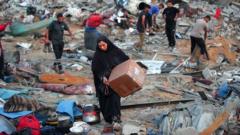
The staggering toll of the conflict—measured in thousands of deaths and widespread destruction throughout Gaza—creates an emotional and political context that complicates any negotiation process. Communities rebuilding from devastation require assurance that disarmament efforts will genuinely prevent future violence rather than merely consolidate existing power structures.
The humanitarian dimension of Hamas disarmament considerations cannot be separated from security calculations. Civilian populations that have endured prolonged conflict demonstrate understandable skepticism toward agreements that promise peace without immediate tangible improvements in living conditions and security guarantees.
Infrastructure Reconstruction and Regional Implications
Gaza's reconstruction presents an opportunity linked directly to any successful Hamas disarmament initiatives. The devastation of civilian infrastructure, including hospitals, schools, and residential areas, demands parallel progress on humanitarian and security fronts. Economic revitalization becomes contingent upon verified weapons reductions and restored regional stability.
The Hamas disarmament plan cannot operate in isolation from broader Middle Eastern geopolitical dynamics. Regional powers maintain competing interests in the outcome, while international stakeholders bring divergent priorities regarding Palestinian self-determination, Israeli security, and regional balance of power.
Verification and Implementation Challenges
Establishing credible verification mechanisms represents perhaps the most significant technical obstacle to implementing a Hamas disarmament plan effectively. Previous disarmament efforts in conflict zones have struggled with clandestine weapons stockpiling, false reporting, and inadequate inspection protocols. Gaza's geographic constraints and historical smuggling networks compound these challenges substantially.
Successful implementation requires unprecedented cooperation between parties with fundamentally opposed security interests. International monitoring bodies would need access, authority, and enforcement mechanisms that participating governments have historically resisted granting. The practical logistics of weapons collection, storage, and destruction must be designed to satisfy multiple parties' security requirements simultaneously.
Rare Opportunities for Genuine Peace
Despite formidable obstacles, the Hamas disarmament plan offers unprecedented opportunity for breaking decades-old conflict cycles. The convergence of international focus, humanitarian urgency, and diplomatic engagement creates a narrow window for transformative agreements that comprehensive conflict resolution requires.
The initiative's success depends fundamentally upon genuine commitment from all stakeholders to prioritize sustainable peace over short-term strategic advantages. Building confidence through incremental agreements, transparent verification procedures, and demonstrated compliance could establish patterns of cooperation that transcend existing hostilities.
Looking Forward: Prerequisites for Success
The Hamas disarmament plan's viability hinges upon several critical conditions being satisfied. Economic incentives for participating factions, international security guarantees, inclusive political arrangements, and transparent governance mechanisms must be developed concurrently with disarmament implementation. Neither unilateral security gains nor political dominance must dominate the negotiation agenda.
The path toward successful Hamas disarmament remains extraordinarily difficult, yet the humanitarian imperative for ending the Gaza conflict creates compelling reasons to pursue even improbable solutions. Future generations in the region deserve the opportunity to build societies free from perpetual conflict, making sustained diplomatic engagement essential regardless of current obstacles.