
Trump Reduces US Military Drills with South Korea After Iran Conflict
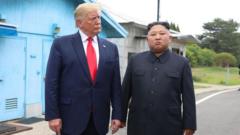
Trump Announces Reduction in US Military Operations with South Korea
President Donald Trump has announced plans to reduce military drills with South Korea, marking a significant shift in defense strategy. The decision to scale back these exercises comes following the US decision to maintain a measured approach during recent Middle Eastern tensions, demonstrating a broader reassessment of American military commitments abroad.
Trump explained that his reasoning behind the military drills reduction stems from what he describes as a "very good relationship" with North Korea's leadership. This strategic consideration reflects the administration's focus on diplomatic engagement rather than extensive show-of-force operations in the Korean Peninsula.
Rationale Behind the Military Strategy Shift
The Trump administration's approach to military drills with South Korea represents a departure from previous administrations' policies. By citing the positive relationship with North Korea, Trump suggests that large-scale military exercises may complicate diplomatic negotiations and peaceful dialogue efforts on the peninsula.
Officials within the administration have indicated that while military drills with South Korea will be reduced in scope and frequency, the fundamental defense commitment to the nation remains unchanged. The reduction specifically targets joint exercises rather than the broader alliance structure that has existed for decades.
Implications for Regional Security and Stability
The decision to downsize military drills with South Korea raises important questions about regional security architecture in East Asia. Military exercises have traditionally served as demonstrations of combined defense capabilities and mutual commitment between allied nations. Reducing these operations sends a complex message to both allies and regional adversaries.
South Korea, facing ongoing security challenges from North Korea, may view the reduction in military drills with some concern. However, the government has expressed willingness to engage with the Trump administration's diplomatic approach, understanding that de-escalation efforts could yield long-term stability benefits.
Impact on the US-South Korea Alliance
The US-South Korea military partnership remains one of the most robust defense alliances in the world. Despite the reduction in military drills, American military personnel continue to maintain a significant presence throughout South Korea, providing critical deterrence capabilities.
The Trump administration's decision does not fundamentally alter the institutional mechanisms of the alliance. Intelligence sharing, logistical cooperation, and operational planning between American and South Korean military forces are expected to continue without significant disruption. The reduction in military drills represents a recalibration rather than a wholesale dismantling of collaborative security efforts.
Broader Context of Trump's Foreign Policy Approach
This decision regarding military drills with South Korea fits within Trump's broader foreign policy philosophy of reducing American military commitments overseas while pursuing diplomatic solutions to international disputes. The administration has previously signaled willingness to engage with adversarial nations through negotiation rather than military posturing.
The Trump approach emphasizes cost-benefit analysis in military deployments and exercises, questioning whether large-scale drills represent effective use of defense resources. This perspective has prompted reviews across multiple theaters where American forces maintain significant presence.
North Korea's Response and Regional Considerations
North Korea has historically responded positively to gestures that reduce military pressure on the peninsula. The reduction in military drills with South Korea may be interpreted as a positive signal by Pyongyang, potentially supporting ongoing diplomatic channels and negotiations.
However, military analysts caution that while diplomatic overtures are valuable, they must be balanced against the very real security requirements of the region. The military capabilities demonstrated through joint exercises with South Korea serve important deterrent functions that cannot be entirely replaced by diplomatic engagement alone.
Conclusion and Future Outlook
Trump's announcement to scale back military drills with South Korea marks another chapter in his administration's distinctive approach to international relations and defense policy. The military drills reduction reflects confidence in diplomatic progress with North Korea while maintaining the essential structures of the US-South Korea alliance. As regional dynamics continue to evolve, both the United States and South Korea will need to carefully balance reduced military exercises with sustained security preparedness and deterrence capabilities.