
Artificial Ice Pyramids: How Himalayan Villages Secure Water Supply
The Water Crisis in High-Altitude Mountain Communities
Artificial glaciers have become a life-saving innovation for remote Himalayan villages facing severe water scarcity challenges. As traditional glaciers continue to retreat due to climate change, mountain communities in India's highest regions have developed an ingenious solution to preserve water resources and maintain agricultural productivity during critical growing seasons.
The villages situated at elevations exceeding 3,000 meters experience extreme seasonal variations that make conventional water management impossible. Winter brings abundant snow and ice, yet summer months present parched conditions when crops demand maximum irrigation. Without access to reliable water sources, farmers cannot cultivate the fields that sustain their families and local economies.
Understanding the Artificial Glacier Mechanism
The creation of artificial glaciers relies on a straightforward yet effective principle of physics and mountain geography. Engineers and local innovators channel water from natural springs and streams toward elevated slopes during winter months. As temperatures plummet in the harsh alpine environment, water flows through constructed channels and disperses across slopes, freezing naturally into massive ice formations.
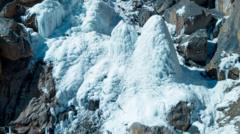
These artificial ice pyramids develop through a gradual accumulation process. Water emerges from underground springs where temperatures remain consistently below freezing. Villagers direct this water through carefully engineered channels that guide the flow across sloped terrain. When water contacts the subfreezing air at high altitudes, it crystallizes and accumulates layer upon layer, creating substantial ice reserves that can measure several meters in height.
The Design and Construction Process
Creating functional artificial glaciers demands precise planning and understanding of local hydrological conditions. Communities conduct extensive surveys to locate reliable water sources capable of sustained winter flow. Engineers then design channel systems that maximize water dispersion across target areas while accounting for terrain slopes and seasonal weather patterns.
The channels themselves are often simple concrete or stone structures, deliberately designed to slow water movement and encourage thorough freezing. Farmers and villagers participate actively in construction and maintenance, ensuring the systems remain functional throughout critical winter periods. This community-based approach has proven sustainable and cost-effective compared to alternative water management solutions.
Spring and Summer Water Benefits
When spring arrives and temperatures gradually increase, the accumulated artificial glaciers begin melting at precisely the moment when farmers need irrigation most urgently. The stored ice provides a steady water supply for weeks or even months, extending the growing season and enabling multiple crop cycles annually.
Village communities now harvest water from these melting ice reserves through collection channels that direct flows toward agricultural fields and storage facilities. Farmers report dramatically improved crop yields since implementing artificial glacier systems. The technology has transformed previously marginal farmland into productive fields capable of supporting diverse crops including potatoes, vegetables, and grains.
Community Impact and Economic Benefits
Beyond immediate agricultural advantages, artificial glaciers have strengthened community resilience and self-sufficiency. Villages that previously experienced economic decline due to water scarcity now support thriving agricultural sectors. Young people remain in their mountain communities rather than migrating to urban centers seeking employment opportunities.
Families gain food security through reliable harvests, while surplus production creates income opportunities through local markets. The innovation has attracted attention from agricultural development agencies and government initiatives, bringing infrastructure improvements and technical support to remote regions that historically received minimal investment.
Challenges and Future Expansion
Despite remarkable success, artificial glacier projects face ongoing challenges. Maintaining channel systems requires consistent community effort and resources. Extremely harsh winter conditions sometimes damage infrastructure, necessitating repairs during the brief construction season before water flows resume.
Climate change itself presents a paradoxical challenge. As global temperatures rise, water sources may diminish while freezing periods shorten. Communities must adapt designs and potentially implement additional complementary water conservation technologies. Scientists collaborate with village leaders to refine methodologies and develop more resilient systems capable of functioning under changing climate scenarios.
Several Himalayan regions now replicate the artificial glacier model, expanding its reach across mountain communities from Ladakh to Nepal. International organizations recognize the innovation's potential for application in other high-altitude regions worldwide facing similar water challenges. Training programs help communities master construction and maintenance techniques, fostering knowledge transfer across borders.
Conclusion: Preserving Mountain Communities
Artificial glaciers represent a triumph of indigenous knowledge combined with practical engineering innovation. Himalayan villages have transformed a critical environmental challenge into an opportunity for sustainable development. The technology demonstrates how mountain communities can adapt to climate pressures while maintaining agricultural traditions and cultural heritage. As water scarcity intensifies globally, these artificial glacier systems offer valuable lessons for adaptation strategies in environmentally vulnerable regions worldwide.