
Cairngorms Wildfire Threat Escalates as Authorities Declare Major Incident
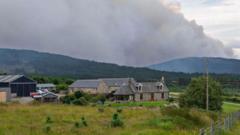
Cairngorms Wildfire Threat Reaches Critical Level Following Wind Shift
Emergency authorities have declared a major incident status in response to escalating Cairngorms wildfire threat conditions. The declaration comes as meteorological conditions shift dramatically, with forecasted wind changes creating heightened risk of rapid fire expansion across the highland region.
Immediate Evacuation Protocol Implemented
The complete evacuation of Nethy Bridge residents represents one of the most significant precautionary measures implemented in the area. Local emergency services coordinated the removal of all inhabitants from the village as a preventative measure against potential fire advancement. The evacuation order reflects the severity assessment by incident commanders monitoring the spreading flames.
Authorities emphasized that the evacuation process prioritized resident safety while maintaining orderly movement from affected zones. Emergency personnel provided guidance and support throughout the relocation procedure, ensuring vulnerable populations received adequate assistance during the departure.
Wind Pattern Changes Amplify Fire Propagation Risk
Meteorological forecasts indicate significant atmospheric changes that could substantially increase the Cairngorms wildfire threat trajectory. Wind direction modifications previously predicted would channel airflows directly toward populated settlements, thereby accelerating potential flame advancement. These meteorological shifts fundamentally altered emergency response strategies and resource allocation decisions.
The interaction between wind patterns and terrain features in the Cairngorms creates complex fire behavior conditions. Elevated regions and valley formations can funnel winds in unpredictable directions, complicating efforts to contain and control advancing fire lines.
Emergency Response and Resource Mobilization
Fire and rescue teams deployed additional resources to strategic positions throughout the affected region. Water-dropping aircraft remained on standby, prepared for rapid deployment should conditions necessitate aerial firefighting interventions. Ground crews established defensive perimeters and worked to protect critical infrastructure and habitation zones.
The major incident declaration enabled streamlined coordination between multiple emergency agencies. Police, fire services, ambulance crews, and local authority personnel operated under unified command structures, facilitating rapid decision-making and resource redeployment based on evolving fire behavior.
Understanding Wildfire Risk Assessment
Fire behavior specialists continuously evaluate multiple variables when determining Cairngorms wildfire threat levels. Fuel moisture content, temperature gradients, relative humidity levels, and wind velocity combine to create hazard indices that inform emergency response protocols. The declaration of major incident status signified that current parameters exceeded established thresholds for standard management procedures.
Historical fire patterns in Scottish highland regions demonstrate how rapidly conditions can deteriorate when atmospheric variables align unfavorably. Previous incidents provided valuable data informing current predictive models and resource positioning strategies.
Community Support and Emergency Services Coordination
Local authorities established emergency support facilities for evacuated residents, providing temporary accommodation, welfare assistance, and information updates. Communication channels remained open between incident commanders and community leaders, ensuring residents received accurate information regarding evacuation procedures and estimated timelines for potential return access.
Fire service personnel worked continuously to monitor fire progression and assess environmental conditions. Real-time data collection enabled rapid strategic adjustments as situations evolved, allowing command teams to anticipate requirements rather than react to emergencies.
Regional Impact and Protective Measures
The Nethy Bridge evacuation reflected broader regional concerns about wildfire propagation across Scotland's mountainous terrain. The incident prompted review of existing emergency protocols and resource allocation procedures across multiple fire and rescue services. Authorities examined lessons learned to strengthen preparedness for future potential events.
Investigation teams documented conditions surrounding the Cairngorms wildfire threat to develop comprehensive understanding of event progression. These analyses inform updated guidelines and training procedures for emergency personnel responding to similar future scenarios.
Current Status and Ongoing Monitoring
Authorities maintained heightened alert status with continuous monitoring of fire advancement, weather patterns, and wind conditions. Updated forecasts influenced operational decisions, with incident commanders regularly reassessing threat levels and evacuation requirements. Communication with residents remained ongoing, providing timely notifications regarding access restrictions and safety information.
The major incident declaration demonstrated commitment to prioritizing life safety above all other considerations. Emergency services continued proactive surveillance of the situation, prepared to implement additional protective measures should conditions warrant escalated responses.