
Helium-3 Mining: Lunar Resources Could Transform Energy
Understanding Helium-3: The Rare Isotope Transforming Energy
Helium-3 mining represents one of the most ambitious frontiers in space exploration and clean energy development. This remarkable isotope, far scarcer on Earth than its more common counterpart, has captured the imagination of scientists and entrepreneurs alike who envision extracting it from lunar deposits to address global energy demands.
Helium-3 is a lightweight isotope of helium containing two protons and one neutron. Unlike traditional fossil fuels, this element holds extraordinary potential as a fuel source for next-generation fusion reactors. Its unique nuclear properties make it particularly valuable for producing clean, virtually limitless energy without the radioactive byproducts associated with conventional nuclear power plants.
Current Market Value and Economic Implications
The current pricing of Helium-3 reflects its scarcity and exceptional value. On Earth, this isotope commands premium prices in specialized scientific applications, from medical imaging to cryogenic systems. Industry analysts project that demand for Helium-3 will increase substantially as fusion technology advances and more institutions develop related applications.
The economic case for lunar extraction becomes increasingly compelling when considering future energy requirements. A single ton of Helium-3 could theoretically power an entire nation for years, making the investment in space mining infrastructure economically rational for long-term energy security.
The Moon: Nature's Helium-3 Repository
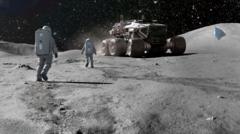
Our lunar satellite harbors abundant deposits of Helium-3 accumulated over billions of years. Solar winds continuously bombard the moon's surface, implanting this valuable isotope into the lunar regolith. Scientists estimate that the moon contains millions of tons of Helium-3, representing a virtually inexhaustible resource for future generations.
Unlike Earth, which possesses minimal natural Helium-3 reserves, the moon's lack of protective magnetic atmosphere has allowed solar wind to deposit this isotope freely across its surface. The regolith, or lunar soil, acts as a natural repository, preserving these isotopes in concentrated pockets accessible to advanced mining operations.
Technical Challenges in Lunar Helium-3 Mining
Extracting Helium-3 from the moon presents formidable engineering obstacles that researchers continue addressing. The harsh lunar environment, characterized by extreme temperature variations, vacuum conditions, and cosmic radiation, requires specialized equipment and robotics designed to function independently from human oversight.
Current extraction methodologies involve heating lunar regolith to temperatures where Helium-3 and other volatiles separate from soil particles. This process, known as in-situ resource utilization, must operate with minimal power consumption and maximum efficiency to justify the substantial logistics of transporting equipment to the lunar surface.
Equipment and Infrastructure Requirements
Establishing Helium-3 mining operations demands constructing permanent lunar bases with power generation systems, processing facilities, and storage infrastructure. Mining equipment must withstand the lunar environment's extreme conditions while maintaining operational integrity across extended periods.
Transportation and Cost Considerations
Moving extracted Helium-3 from the moon to Earth requires developing reliable spacecraft capable of transporting valuable cargo across 240,000 miles of space. Launch costs, safety protocols, and secure storage mechanisms represent significant financial investments that current space agencies are only beginning to address systematically.
Global Initiatives and Strategic Planning
Multiple nations have incorporated Helium-3 extraction into their long-term space exploration strategies. China has explicitly mentioned lunar resource extraction in its space program objectives, while private companies increasingly develop technologies supporting these ambitious goals.
The Artemis program and similar international initiatives create frameworks for establishing permanent lunar presence, essential infrastructure for implementing large-scale Helium-3 mining operations. These coordinated efforts signal growing commitment to transforming the moon from scientific curiosity into functional resource extraction site.
Future Implications for Global Energy
Successfully mining Helium-3 could fundamentally reshape humanity's energy landscape. Fusion reactors powered by this isotope would provide emissions-free electricity generation, eliminating dependence on fossil fuels and reducing geopolitical tensions surrounding traditional energy resources.
The transition to Helium-3 fusion energy represents a generational shift in how civilization approaches power production. While significant technological hurdles remain, the potential benefits justify continued investment and research into lunar mining capabilities.