
Ukraine Reports Critical Shortage of Interceptor Missiles After Massive Russian Attack
Ukraine Faces Critical Interceptor Missile Shortage Amid Escalating Attacks
Ukraine is confronting an interceptor missile shortage that threatens its ability to defend against sustained Russian bombardments. The situation has become increasingly dire as the nation continues to face relentless aerial assaults targeting major population centers and critical infrastructure.
Sunday's Massive Russian Attack on Kyiv
President Volodymyr Zelensky reported that Sunday's assault represented one of the most significant aerial operations conducted by Russian forces during the ongoing conflict. According to the Ukrainian president, the coordinated attack involved an unprecedented combination of weaponry designed to overwhelm existing air defense systems.
The offensive comprised 68 missiles and 351 strike drones launched against targets across Ukrainian territory, with particular focus on the Kyiv region. This combined deployment of cruise missiles and unmanned aerial vehicles demonstrated a deliberate strategy to deplete Ukrainian interceptor resources through volume attacks.
Impact on Kyiv Region and Casualty Report
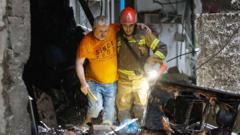
The bombardment resulted in significant loss of life, with 23 individuals killed in the Kyiv region alone. Beyond the immediate casualties, the attack caused extensive damage to residential areas, commercial facilities, and infrastructure networks. Emergency services mobilized rapidly to assist survivors and contain secondary damage from fires and explosions.
The scale of destruction underscores the effectiveness of Russian tactics when Ukrainian air defenses become exhausted. Each successful strike represents both immediate humanitarian consequences and strategic losses that affect national defense capabilities.
Challenges in Maintaining Air Defense Systems
The interceptor missile shortage represents a fundamental vulnerability in Ukraine's defensive architecture. Unlike offensive weapons systems that can be replenished through domestic production, interceptor missiles require sophisticated manufacturing capabilities and advanced supply chains. Ukraine depends heavily on international support to maintain adequate stocks.
Air defense systems consume significant quantities of interceptor missiles during sustained combat operations. Each engagement reduces available inventory, and the pace of Russian attacks has outstripped resupply efforts. This imbalance creates tactical disadvantages that adversaries can exploit through coordinated multi-vector assaults.
International Support and Supply Constraints
Western allies have committed to supporting Ukrainian defense efforts through military aid packages that include air defense systems and ammunition. However, the scale of current Russian operations exceeds the capacity of existing international supply networks. Manufacturing constraints in allied nations limit how quickly replacement inventory can be produced and delivered.
The interceptor missile shortage has emerged as a critical constraint on Ukraine's defensive strategy. Military planners must now prioritize targets, allowing some Russian strikes to pass unchallenged due to insufficient interceptor availability. This forced rationing of defensive resources creates tactical complications.
Strategic Implications and Defense Perspectives
President Zelensky's public warnings about the interceptor missile shortage serve multiple purposes. The statements communicate urgent needs to international partners while also demonstrating resolve to Ukrainian citizens. Officials emphasize that adequate air defense resources remain essential for civilian protection and military operations.
The challenge extends beyond simple ammunition replenishment. Effective air defense requires integrated systems, trained personnel, and coordination between multiple defense units. When interceptor availability becomes limited, commanders must make difficult decisions about resource allocation across different geographic areas and military objectives.
Civilian Impact and Infrastructure Damage
Sunday's attack resulted in collateral damage affecting civilian infrastructure. Power facilities, water systems, and medical centers sustained hits, complicating emergency response and long-term recovery operations. The concentrated nature of the assault, employing both missiles and drones simultaneously, challenged air defense capabilities.
Civilian populations remain vulnerable when interceptor missiles cannot be deployed in sufficient quantities. Each unchallenged Russian strike multiplies humanitarian consequences and extends damage across broader geographic areas.
Looking Forward: Defense Requirements
Ukraine's military leadership continues emphasizing that consistent international support remains critical for sustained defense operations. The interceptor missile shortage will likely remain a constraining factor unless supply arrangements expand significantly. Future defense planning must account for ongoing consumption rates and realistic replenishment timelines.
The conflict demonstrates that modern air defense systems depend on continuous ammunition resupply. Russia's strategy of mounting successive large-scale attacks intentionally targets this vulnerability, seeking to exhaust Ukrainian interceptor reserves and create gaps in defensive coverage that can be exploited for maximum effect.